Hotel Vocabulary in English for Kids
The 16 core terms cover four hotel tasks: checking in, finding the correct floor, requesting an item, and checking out. Start with nouns such as towel, pillow, and room card. Add check in, take the lift, and Could we have another pillow, please? A five-minute pretend stay trains children to hear a question, answer briefly, and request what they need. This is the goal of Hotel Vocabulary in English for Kids: Words and Activities.
Essential Hotel Words
With Hotel Vocabulary in English for Kids: Words and Activities, teach terms in guest order: buildings and people, objects, then actions. The 16-item set excludes specialist staff language.
Teach regional pairs together: lift/elevator and reception/front desk. Both forms are correct. Children should recognise both and choose one when speaking.
Useful Phrases in Context
Hotel Vocabulary in English for Kids: Words and Activities develops speech, not word recitation. At reception, a child can say, Hello. We have a booking. If lost, they can ask, Where is room 204?
Practise requests with Could we have…? Try another towel, water, or an extra pillow. A younger child can say A towel, please; an older learner can ask Could you bring another towel, please?
Hotel staff may ask, What is your name?, What is your room number?, or How many nights are you staying? Invent answers during play. Never share real booking details, addresses, or accommodation numbers outside the family.
Activities for Different Ages
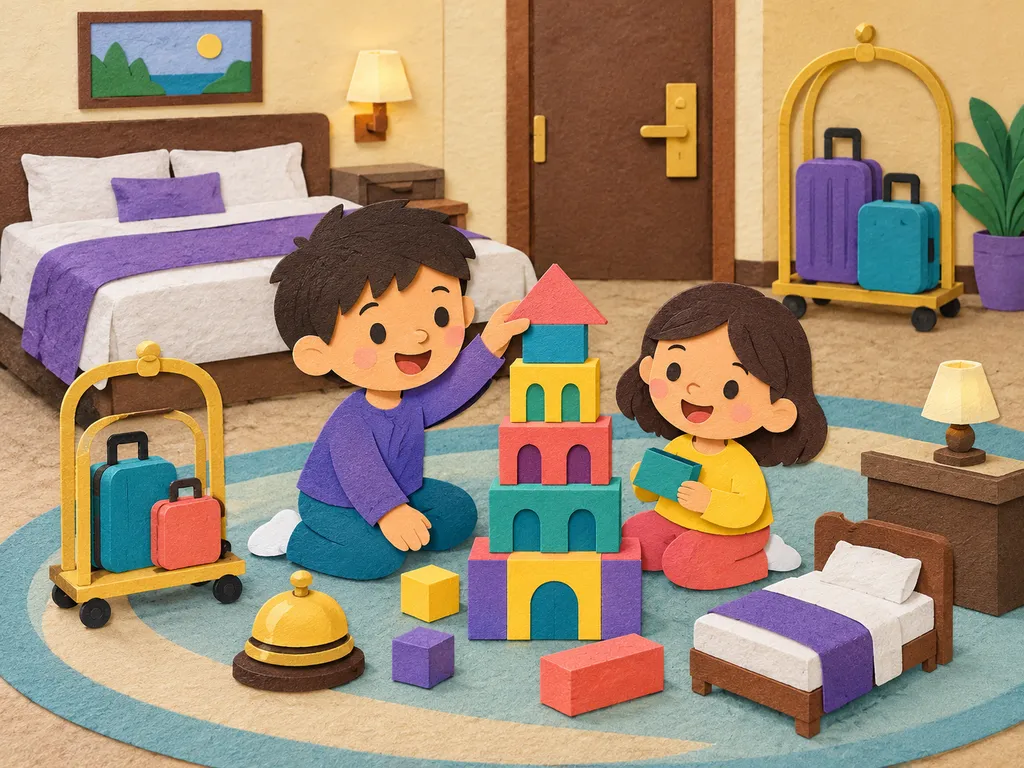
For Hotel Vocabulary in English for Kids: Words and Activities, adapt the task by age. Younger children need objects, movement, and repetition. Older learners can handle longer exchanges, choices, and problems.
Swap roles after each round. Playing the receptionist makes the child listen and speak. Changing each exchange tests active language instead of a memorised script.
Practice with a Pretend Hotel Stay
Set up a hotel desk with paper, a pencil, a bag, and an old access pass with personal details covered. Add a door-number sign and breakfast menu. In LearnLink online English lessons, our tutors adapt role-play to each learner’s age and speaking level.
Five-minute Hotel Role-play
One person is the receptionist; the other is the guest. The guest says hello, gives an invented name, asks for a room key, checks breakfast time, and requests one item. Swap roles, changing the floor or problem.
Turn Hotel Vocabulary in English for Kids: Words and Activities into active speech by changing one detail per scene. The lift may stop working, the electronic key may fail, or the guest may need another towel. Each change makes the child listen and respond.
Finish with unaided recall. Remove the props and ask your child to name five hotel items. Later, draw a hotel bedroom and label the bed, pillow, bathroom, door, and key.
Common Mistakes and Clear Corrections
Children may say I have a reserve instead of I have a reservation, or confuse room with number. Model the full phrase once, then invite another attempt. Brief correction keeps the conversation moving.
- I want check in. → I want to check in.
- Where is my room in? → Where is my room?
- We have reserve. → We have a reservation.
- My number is 204. → My room number is 204.
- Give me a towel. → Could I have a towel, please?
- We stay two night. → We are staying for two nights.
Floor names vary. The street-level floor may be the ground floor or first floor, so teach children to check signs. For pronunciation, contrast room with loom. Practise the consonants in guest, desk, and breakfast slowly, then return to full sentences.
When a word has several meanings or pronunciations, Cambridge Dictionary is a useful check before turning it into child-friendly examples.
Frequently Asked Questions
Use these answers to choose starting words and a practice routine.
What Hotel Words Should My Child Learn First?
Start with six practical words: hotel, room, reception, card, bathroom, and breakfast. Add Hello, We have a booking, and Which floor is it on? Hotel Vocabulary in English for Kids: Words and Activities should progress from nouns to short requests. A small set practised through play beats a long memorised list.
Should My Child Learn British or American Hotel Terms?
Teach the form your child will probably hear, then introduce alternatives. Pair lift with elevator, reception with front desk, and booking with reservation. Children need not use every version, but recognising both helps them understand hotel staff from different countries.
How Can a Multilingual Child Practise Without Translating Every Word?
Present objects, pictures, gestures, and hotel scenes before translating. Show a room key while saying the phrase, or point to a lobby drawing. If the meaning remains unclear, translate briefly, then repeat the English phrase to connect it with the situation.
Can We Learn Hotel Vocabulary Without Planning a Trip?
Yes. Create a reception desk, assign door numbers, pack a small bag, and act out check-in, breakfast, and a request for help. Repeat the short scene on different days so your child meets familiar language in changing situations.
If your child needs steady speaking practice, start small — choose a trial lesson.
Stay updated on our latest tips and resources by following us on Instagram LearnLink.